Mattress Materials & Buying Guides
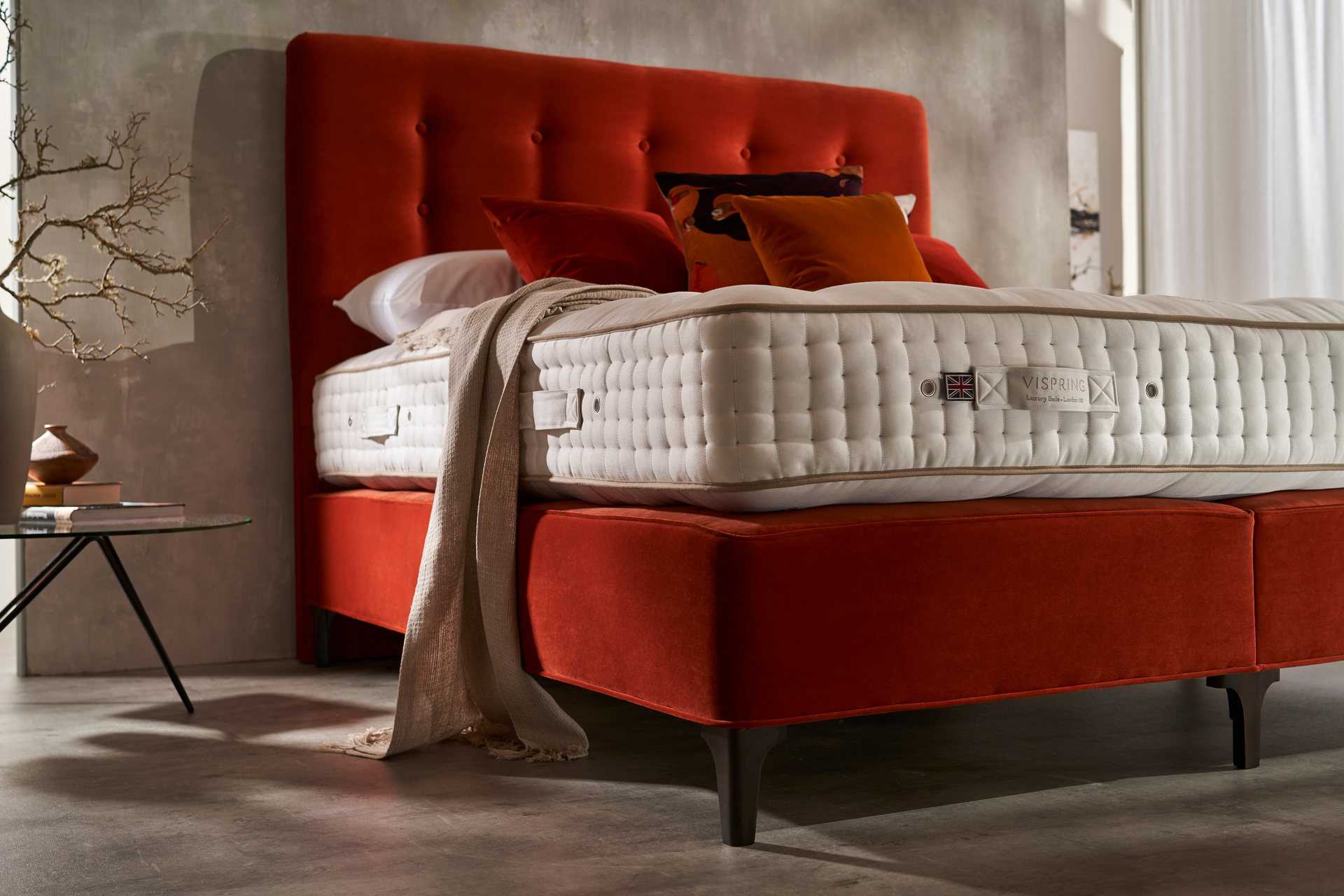
Vispring Diamond Majesty: What to Know About This Luxury Mattress
A distinguished name can make a mattress sound like a conclusion. It is better treated as a beginning: a prompt to ask what is inside, how the bed is meant to feel, and whether its particular kind of support suits the sleeper who will live with it.
The Vispring Diamond Majesty has the sort of name that seems to arrive already wearing a dinner jacket. But buying a luxury mattress is less like selecting a title from a menu than examining a small, carefully engineered landscape: springs, upholstery, ticking, foundation, and the terms that govern what happens after delivery. The useful questions are practical. What construction is actually offered? Which materials are specified? Are comfort choices available? How does the mattress respond to your body, sleep position, and temperature preferences?
Those questions matter especially when a model is discussed in aspirational language. Words such as luxury, natural, and supportive may suggest a general character, but they do not establish the details of a particular mattress. Specifications can change by market, size, configuration, or production period. For the Diamond Majesty, confirm current information with Vispring or an authorized retailer rather than assuming that a description found elsewhere applies to the exact version under consideration.
This guide offers a way to evaluate the Vispring Diamond Majesty without mistaking prestige for evidence. It explains what to ask about materials, support, feel, dimensions, foundation compatibility, maintenance, and purchase terms—and how to compare a high-end bed with alternatives on equal footing.
Start with the specification, not the name
A mattress name can remain constant while details vary. A showroom sample may be configured differently from the item quoted for delivery; a description may omit options, or refer to a different size or market. Before drawing conclusions, ask for the current written specification for the exact model, size, and configuration you are considering.
Look for a clear description of the support system and upholstery. If the mattress uses springs, ask about their type, arrangement, and layers. If it includes natural or synthetic fillings, ask what materials are present and where they sit in the construction. Find out whether the listed materials are blended, layered, or used only in particular components. A material name on its own does not tell you how much of it is used or what role it plays.
Request the same level of detail for the cover and border. The fabric you touch is part of the sleep surface, while the border and edge construction can affect how the mattress feels when sitting or sleeping near its perimeter. If the seller provides a specification sheet, keep it with the order paperwork. It offers a useful reference if you later need to confirm care instructions, warranty coverage, or whether the delivered product matches the description.
- Construction: What support system and comfort layers make up this model?
- Materials: Which fibers, foams, springs, and cover fabrics are used in the exact configuration?
- Options: Are there different firmnesses, tensions, or upholstery choices?
- Variations: Do specifications change by size, region, or production date?
- Documentation: Can the retailer provide the current details in writing?
These are not questions designed to catch anyone out. They simply turn an evocative name into information you can compare.
Materials: what they can—and cannot—tell you
Materials influence a mattress’s feel, airflow, resilience, and care needs, but none acts alone. A natural fiber may help manage moisture or contribute a particular surface character; latex can feel buoyant and responsive; foam can offer varying degrees of contouring; coils can supply spring and structure. Yet the finished sensation depends on how these components are layered, how densely they are used, and how the whole mattress is built.
For that reason, ask not only what a mattress contains but what each material is intended to do. Is a filling close to the surface, where it affects initial softness, or deeper in the upholstery? Is the top layer meant to cushion pressure points, or is the central system doing most of the supporting? Does the construction allow the sleeper to settle gradually, or does it respond more quickly when weight shifts? These distinctions are more revealing than an ingredient list read in isolation.
Also clarify any environmental or health-related claims. Terms such as “organic,” “natural,” and “chemical-free” can have different meanings, and a claim about one component does not necessarily describe the entire mattress. If certification matters to you, ask which specific materials or finished products are covered and who issued the certification. Avoid assuming that an attractive material description proves a particular health benefit.
Finally, consider the practical side of upholstery. A complex interior may be designed to offer a distinctive feel, but it can also come with specific care directions and limited options for washing or spot treatment. Ask whether the cover is removable, what routine maintenance is recommended, and which cleaning methods could affect the warranty. A mattress is not improved by a care routine that its maker does not advise.
Support is personal, not a synonym for firmness
In mattress descriptions, “support” is often made to carry several meanings at once. It may refer to the way a mattress holds the body, the stability of its construction, the feel beneath the hips and shoulders, or simply the impression of firmness. These are related, but they are not interchangeable. A mattress can feel plush at the surface while offering substantial underlying structure; another can feel firm without matching a particular sleeper’s preferred alignment.
There is no universally correct firmness for every body. Sleep position, body shape, weight distribution, mobility, and personal comfort all influence how a surface feels. Side sleepers may be especially attentive to pressure around the shoulder and hip. Back sleepers may focus on whether the surface feels level and comfortable through the night. Stomach sleepers often have different preferences about how much the body settles. These are useful points of reflection, not rigid rules or medical prescriptions.
When trying the Diamond Majesty, spend enough time in your ordinary sleeping positions to notice more than the first impression. Let your shoulders and hips settle. Turn from side to side. If you share a bed, try it together: movement transfer, available space, and each sleeper’s preferred feel can become more important than a showroom label. Notice whether you feel held, pressed, suspended, or deeply cushioned—and whether that feeling remains comfortable after several minutes.
Ask the retailer to explain any firmness terminology in concrete terms and whether different comfort choices are available. Labels such as “medium” or “firm” are not standardized across manufacturers. A side-by-side test can help, but even then, compare models in similar sizes and configurations. The word on a tag matters less than the response of the surface to your body.
Temperature and the quiet importance of the sleep surface
People who wake warm often look first for a “cooling” mattress. That word can be useful as a starting point, but it does not promise a specific sleep temperature. Bedding, room conditions, clothing, individual physiology, and the mattress’s materials all contribute to thermal comfort. A breathable cover or moisture-managing fiber may affect the surface environment, yet no mattress can compensate for every source of heat.
When reviewing the Diamond Majesty’s materials, ask how the cover and upholstery are expected to behave together. Does the surface feel warm or cool in the showroom? Does it allow air to move? Are there care or protector recommendations that might change the hand-feel? If you tend to overheat, test the mattress in the conditions most comparable to your home and consider the sheets, duvet, and protector as part of the same system.
Be cautious about treating the presence of a particular fiber as proof that you will sleep cooler. Material properties matter, but the finished construction and your own circumstances matter too. A clear explanation of design intent is more useful than a sweeping promise.
Try the mattress as you would actually use it
A showroom test is not a full night’s sleep, but it can still reveal meaningful things. Wear comfortable clothing, lie down in the positions you normally use, and give your body time to settle. Avoid judging a mattress only by pressing it with your hand or sitting briefly on the edge. Those gestures test a small part of the experience; your whole body, in its usual posture, is the better instrument.
Pay attention to pressure and transitions. Can you change positions without feeling trapped? Do your shoulders and hips feel comfortable? If you sleep with another person, does movement on one side disturb the other? Is the edge stable enough for getting in and out of bed? If you use an adjustable base, ask whether the exact model and size are approved for that application before testing it on one.
Where possible, compare the Diamond Majesty with at least one alternative that differs in construction or feel. A comparison might include another innerspring design, a foam or latex model, or a different upholstery profile. The point is not to identify a universal winner. It is to determine which trade-offs matter to you: closer contouring or quicker response, more surface softness or a firmer initial feel, a particular material profile or a different maintenance routine.
If an in-store trial is the only option, take notes immediately afterward. Memory is generous to a persuasive showroom, and less exact once the decision is being made at home.
Dimensions, foundation, and the bed around the bed
A mattress is not a free-standing object in the abstract. Its practical performance depends on the frame or foundation beneath it, the room it occupies, and the people who need to move around it. Confirm the exact mattress dimensions rather than relying only on a familiar size name; sizing conventions can differ between countries and manufacturers.
Measure the bedroom, doorways, stairwells, and any tight turns on the delivery route. Check the height of the bed once the mattress is paired with its foundation, since an unusually tall or low combination may change how easy it is to get in and out. If the bed has a headboard, rails, or an adjustable base, verify compatibility with the complete setup—not just the mattress in isolation.
Ask whether the recommended foundation has a particular construction, spacing, or support requirement. A mismatch can affect how a mattress feels and may have implications for warranty coverage. Clarify whether the foundation is included in the quote, sold separately, or required for the warranty to apply.
Delivery deserves the same attention as dimensions. Find out whether setup, removal of an existing mattress, packaging disposal, and access-related charges are included. A mattress can be beautifully specified and still make for a difficult purchase if the delivery terms are vague.
Price, trial periods, and warranty terms
The cost of a luxury mattress is only one part of its value. The price should be considered alongside its construction, expected use, comfort, service, and the consequences of getting the choice wrong. Before purchasing, ask for an itemized quote that identifies the mattress, size, foundation, delivery, setup, and any optional accessories. Confirm whether taxes or other fees are additional.
Trial policies vary considerably. Some purchases include a home trial; others do not, or impose conditions such as a required protector, minimum trial period, exchange charge, or return fee. Get the full policy in writing before ordering. Ask how exchanges work, whether a different firmness is available, and what happens if the mattress cannot be made comfortable within the stated period.
Read warranty terms with similar care. A warranty typically addresses specific defects under defined conditions; it is not automatically a guarantee of comfort or a promise that a mattress will feel unchanged indefinitely. Check the length of coverage, what constitutes a covered defect, how claims are assessed, and whether the foundation or care practices affect eligibility. Make sure you understand what proof of purchase and documentation you should retain.
A lengthy warranty can sound reassuring, but its usefulness depends on the exclusions and claims process. A generous trial may matter more to a buyer uncertain about feel; clear service arrangements may matter more to someone arranging a complex delivery. Evaluate the terms that address your actual risks, rather than relying on a single headline figure.
A product-agnostic way to compare luxury mattresses
High-end mattresses are often described through brand heritage, handwork, rare materials, or elaborate construction. Those details may be meaningful, but a fair comparison asks what they deliver in the finished bed. To keep the process grounded, compare candidates across the same set of questions rather than letting each brand choose its own terms.
| What to compare | Questions to ask |
|---|---|
| Construction | What are the support core, comfort layers, and upholstery materials? |
| Feel and support | How does it feel in your normal sleep positions, and what comfort options exist? |
| Temperature | What is known about the cover and materials, and how might the full bedding setup affect warmth? |
| Fit and compatibility | Are the dimensions correct, and does it suit your foundation or adjustable base? |
| Care | What are the cleaning, rotation, and protector recommendations? |
| Purchase terms | What do delivery, trial, exchange, return, and warranty policies actually cover? |
| Total cost | What is included in the written quote, and which costs are additional? |
This method does not flatten every mattress into a spreadsheet. It helps keep the comparison honest. A distinctive construction can be valuable if it produces a feel and level of comfort you genuinely prefer. A well-known name, however, cannot answer that question on your behalf.
Questions to take to a retailer
A short list can make a showroom visit more productive. Ask for direct answers, and request written confirmation where a policy or specification could affect your decision.
- Can I see the current specification for this exact Diamond Majesty model, size, and configuration?
- Which materials make up the support system, comfort layers, cover, and border?
- Are firmness or upholstery options available, and do they change by size?
- How would you describe the feel in practical terms, and can I compare it with another construction?
- What foundation is required or recommended, and is it included in the quote?
- Is the mattress compatible with my existing bed frame or adjustable base?
- What are the care instructions, and is a protector recommended or required?
- What do delivery, setup, old-mattress removal, trial, exchange, and return policies include?
- What does the warranty cover, and what conditions could affect a claim?
So, is the Vispring Diamond Majesty worth considering?
It may be—if the verified construction, available comfort choices, and in-person feel align with your needs, and if the purchase terms make sense for your household. The name alone cannot establish whether it will suit your body or preferences. Nor can a list of materials tell you, by itself, how the finished mattress will feel through a night.
The most dependable approach is to gather the current specification, test the mattress in your normal sleeping positions, compare it with alternatives, and scrutinize the foundation, delivery, trial, and warranty arrangements. If you are considering the Diamond Majesty alongside other Vispring models, ask for the differences to be explained in terms of construction and feel, not just position in a collection. If you are comparing across brands, use the same questions for each.
Luxury is most persuasive when it becomes tangible: a surface you enjoy, support that feels right to you, materials and care requirements you understand, and a clear path if the mattress does not work out. The better decision is not necessarily the one with the grandest name. It is the one that fits the sleeper, the room, and the terms of the purchase.
A final checklist before you decide
- Confirm current Diamond Majesty specifications with the manufacturer or an authorized retailer.
- Test the mattress in your usual sleeping positions and, if relevant, with your bed partner.
- Check exact dimensions, foundation requirements, and adjustable-base compatibility.
- Understand care instructions and any protector recommendations.
- Review the complete quote, delivery arrangements, trial terms, and warranty exclusions.
- Compare it with other mattresses using the same practical criteria.

