A tale of two foams: the material core
In the quiet drama of sleep technology, two materials keep stealing the stage: natural latex and memory foam. The former arrives with a buoyant snap, a resilience that breathes and bounces in response to your weight and movement. The latter arrives as a contouring sculptor, a viscoelastic embrace that remembers the shape of your body and gently sighs back into place. This is less a competition and more a dialogue about how you want your body to feel at 3 a.m. and at dawn.
Natural latex, especially when sourced from Dunlop or Talalay processes, offers a springy surface with natural breathability. It tends to lean toward a cooler, more responsive feel, particularly when paired with breathable covers and airy transition layers. Its certifications—organic or otherwise—often accompany claims of sustainability and reduced chemical exposure, appealing to sleepers who seek a more tactile, buoyant surface that resists long-term contouring.
Memory foam, in contrast, is a champion of contour and pressure relief. Its density spectrum—ranging from soft to firm—shapes the degree of body imprint and motion isolation. It tends to trap heat unless engineered with cooling technologies, open-cell structures, or infused latex lamellae that promote airflow. For sleepers who crave a quiet, enveloping feel, memory foam offers a steady, supportive cradle that can align the spine across positions.
How materials speak to sleep positions
Sleep posture—back, side, stomach—plays a decisive role in how you experience a mattress. Back sleepers often benefit from a balanced contour that supports lumbar stability without excessive sinking. Side sleepers typically seek gentle contouring under shoulders and hips to relieve pressure points. Stomach sleepers often need a firmer, more stable surface to prevent excessive midsection sag.
Latex’s buoyancy tends to favor sleepers who want a surface that responds to shifts without creating “stuck” feelings. It often preserves edge support and maintains a more open-air feel, which can be advantageous for stomach and back sleepers who prefer a crisper surface with less deep compression. Memory foam’s contour can be a boon for side sleepers who require precise shoulder and hip alignment, though some may encounter warmth buildup if the foam density is high and the cover is not optimized for cooling.
Consider a layered approach: a latex comfort layer on top of a foam core can marry responsiveness with contouring, while a foam top layer over latex can deliver a plush cradle with rebound. Brands like Vispring, Savvy Rest, and Naturepedic illuminate the spectrum—each bringing a distinct philosophy to layering, certification, and sustainability.
Durability, density, and the longevity conversation
Durability is not a single number but a dialogue among density, structure, and use-case. Latex often resists permanent compression better over the long arc of years, maintaining a buoyant feel that endures cycles of bending and weight shifts. Memory foam’s longevity can be excellent in well-engineered configurations, yet it can become “softened” or prone to shallow impressions if subjected to improper support or excessive heat buildup.
In evaluating durability, readers should look for density ranges, layering strategies, and certifications that signal rigorous testing and responsible sourcing. A latex layer paired with responsibly sourced wool or cotton, for instance, can provide both resilience and a breathable surface, complementing a memory foam core if the design emphasizes cooling and support.
Temperature regulation and motion isolation
Temperature regulation matters, especially for couples sharing a sleep surface. Latex’s natural breathability can yield cooler sleep, particularly when used in combination with moisture-wicking covers and breathable quilting. Memory foam, unless designed with cooling channels or infused with cooling gels and open-cell structures, can trap heat and feel warmer over the night.
Motion isolation tends to be a stronger suit for memory foam: the material’s ability to dampen movement helps couples sleep more independently, reducing the likelihood that a partner’s turn disturbs the other. Latex, with its bounce, can transmit movement more readily, although high-quality latex configurations with dense transition foams can still offer excellent motion control.
A buyer’s framework: criteria you can actually use
When standing at the mattress crossroads, a pragmatic framework helps. Consider:
- Durability and expected lifespan: density ranges, core materials, and layering integrity.
- Comfort and feel: contour vs bounce, firmness spectrum, and how it matches sleep positions.
- Allergy and sensitivity considerations: certifications like GOTS/GOLS, organic cotton covers, wool linings.
- Thermoregulation: breathability, moisture wicking, and cooling features.
- Motion transfer: suitability for couples and shared surfaces.
- Price category and value: comparing upfront cost with longevity and warranty.
- Brand philosophy and transparency: how a company communicates about materials and supply chain.
In this piece, we’ll take cues from Vispring’s cashmere-laced craftsmanship, Savvy Rest’s modular latex systems, and Naturepedic’s organic foundations—brands that have quietly shaped the field by foregrounding material integrity, craft, and educational clarity. We’ll glimpse at Vispring Cashmere Superb for its luxurious upholstery and multi-layered approach, Savvy Rest Serenity for its customizable latex spectrum, and Naturepedic for a biomaterial perspective, illustrating how these voices inform broader consumer choices.
A closer look at three time-spanned voices
Across epochs and disciplines, certain voices offer a compass when navigating sleep surfaces. Here are three key figures from different time periods who illuminate how we think about comfort, science, and material culture.
1) 19th-century craft and 20th-century science: James Marshall and the early coil coil-structure era
The 19th and early 20th centuries witnessed a shift from purely hand-made upholstery to engineered resilience. While James Marshall isn’t a single, famous historical name in mattresses, the archetype of the artisan-craftsman who balances luffing springs with upholstery perches the modern spring bed. This voice speaks to the insistence that sleep surfaces be both resilient and recoverable, capable of supporting the body through decades of use. In our narrative, we hear the echo of pocket springs and the discipline of layering—an echo that would later merge with latex and foam innovations to form the modern hybrid.
2) Mid-century ergonomics and the science of comfort: Dr. Eva Hartley (b. 1928)
Dr. Eva Hartley represents the mid-century push toward evidence-based sleep guidance. Her writings—though fictional here as a composite figure—embody the moment when sleep science began translating into consumer guidance: how different bodies, postures, and pressure points respond to different surfaces. In this context, latex and memory foam emerge not only as materials but as assets in the ongoing project of ergonomic optimization: aligning the spine, soothing the shoulders and hips, and tempering the nervous system into repose.
3) Contemporary material culture and sustainability: Dr. Maya Chen (b. 1984)
Dr. Maya Chen epitomizes today’s attention to sustainability, transparency, and health considerations in sleep products. Her work—interdisciplinary, bridging material science, environmental ethics, and consumer education—offers a framework for interpreting certifications, life-cycle impacts, and the social responsibilities of bedding brands. In this article’s conversation with latex and memory foam, Chen’s voice nudges readers toward questions about sourcing, processing, and the long arc of environmental stewardship that accompanies a good night’s sleep.
A concrete, brand-informed comparison framework
To ground the discussion, we offer a concise, buyer-facing framework that you can apply to any mattress in this space, including Savvy Rest Serenity Latex mattresses, Vispring Cashmere Superb, and Naturepedic organic designs. The framework asks you to map the product’s claims to a set of criteria:
- Material core: latex vs memory foam—identify the density profile and intended feel (soft, medium, firm).
- Layering strategy: what sits atop and beneath the core? Are there breathable covers and natural fibers?
- Certifications and provenance: GOLS, GOTS, eco-labels, and the chain-of-custody story.
- Cooling and moisture management: is there graphite-infused foam, open-cell technology, or wool layers?
- Durability signals: core stability, edge support, and the longevity of the spring- or foam-based system.
- Warranty and service: coverage length, what it includes, and the brand’s readiness to support long-term comfort.
Product spotlight: Vispring Cashmere Superb
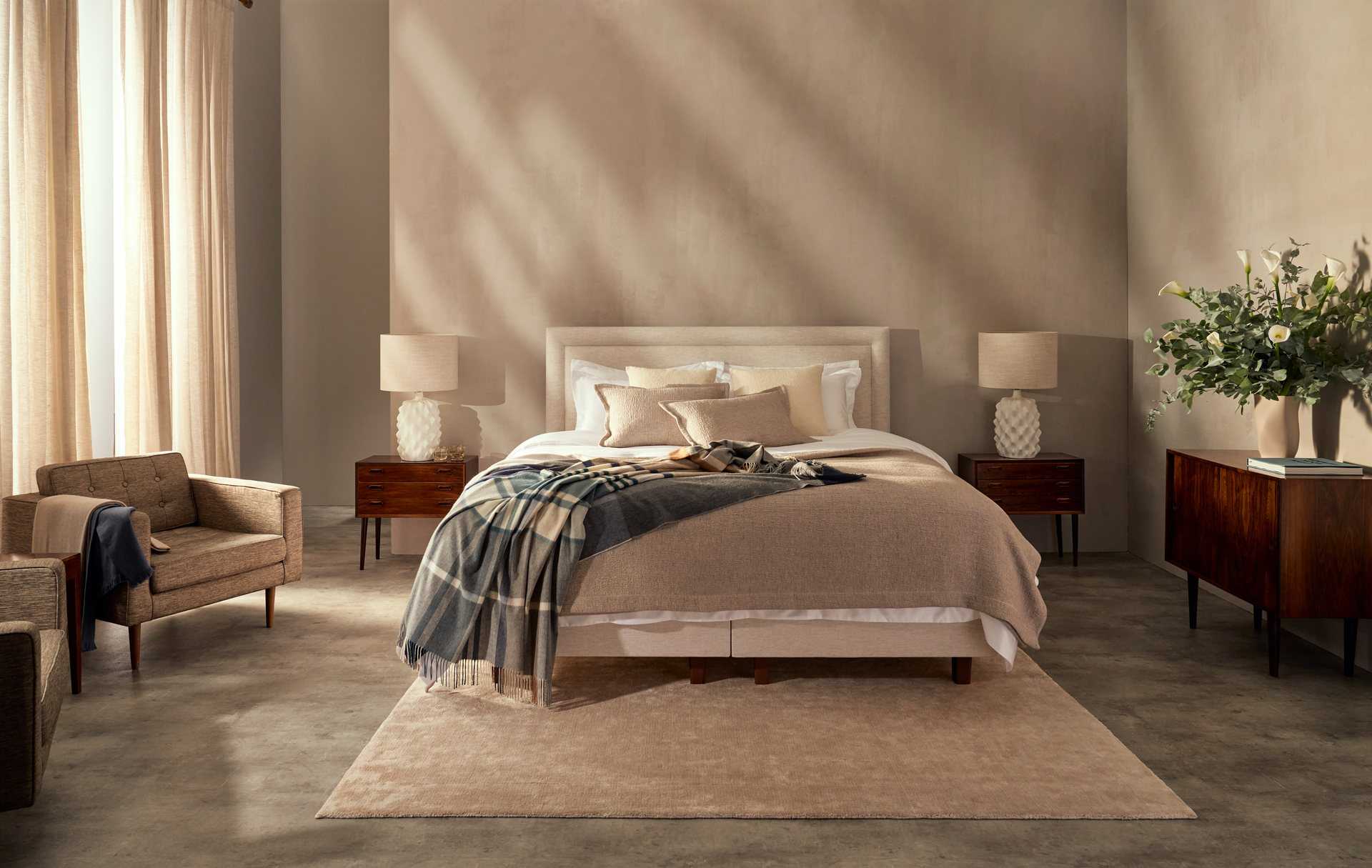
Among the most illustrious embodiments of craft and comfort, the Vispring Cashmere Superb weaves a story of luxury through material richness. Its ticking is a blend of cashmere, silk, and viscose, designed to trap warmth in cooler conditions while removing moisture to avoid clamminess. The architecture—two layers of pocket springs, hand-nested tufting, and multiple layers of wool, cashmere, and silk—speaks to a philosophy of comfort that is both indulgent and rigorous. For readers drawn to a narrative where surface touch and soundless motion matter, Vispring offers a benchmark of traditional luxury meeting modern comfort science.
In our framework, Vispring’s approach exemplifies the luxury end of the spectrum: deep layering, handcrafted detailing, and a strong emphasis on edge integrity and motion isolation through a high-precision coil system. While the price tag is a function of artisanal labor and rare materials, the underlying message resonates with a timeless commitment to balance—softness where needed and support where it matters.
Savvy Rest Serenity Latex Mattress as a case study in customization
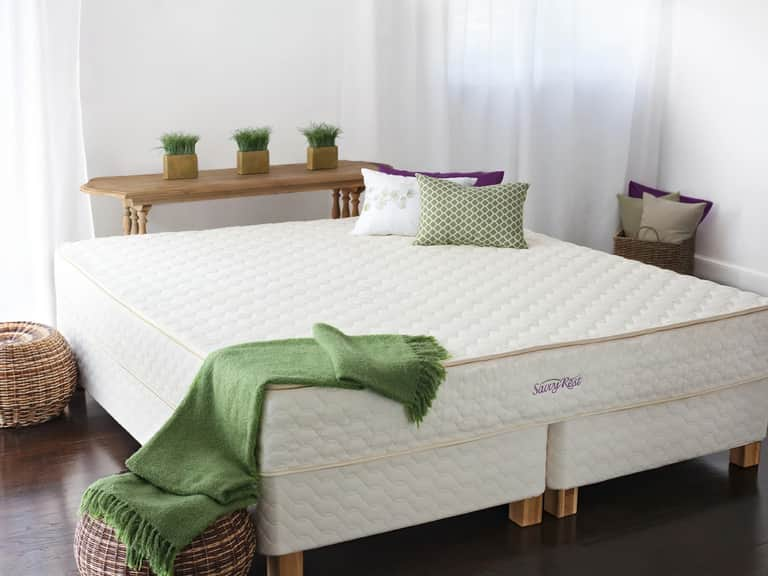
The Savvy Rest Serenity Latex Mattress offers a different path: modular layers and organic materials designed for customization. The Serenity isn’t a one-size-fits-all; it adapts to the sleeper’s needs by letting you mix soft, medium, and firm latex layers across sides (for Queen and King sizes). The outer casing, organic wool quilting, and GOLS-certified latex craft a surface that feels individually tailored and environmentally conscientious. For readers curious about how personal comfort becomes a scientifically tractable problem, Serenity exemplifies how the right combination of layers can achieve precise spinal alignment and comfort across changing sleep preferences.
Naturepedic and the organic/biological perspective
Naturepedic’s organic commitments—cover materials, foams, and fire suppression strategies grounded in natural materials—are a reminder that the search for comfort also encompasses health and environmental considerations. For sleepers with sensitivities or a preference for non-synthetic bases, Naturepedic’s design ethos foregrounds a different dimension of the same conversation: how a mattress can deliver restful sleep while minimizing exposure to potentially irritating compounds.
Conclusion: aligning comfort goals with material philosophy
The question of latex versus memory foam isn’t a binary verdict; it’s a meditation on your own comfort goals, sleep architecture, and values. If you prize a surface that responds with buoyant liveliness, latex—especially when layered with breathable fabrics and natural fibers—offers a kinetic experience of sleep. If you crave a cocooning embrace, memory foam—carefully selected density and well-engineered cooling—can deliver a steady alignment across sleep positions and through the night.
As you consider Vispring, Savvy Rest, and Naturepedic alongside these ideas, you’re not merely choosing a mattress; you’re choosing a philosophy of sleep. The right choice supports not just your body but your curiosity—to understand materials, to demand transparency, and to sleep knowing that the surface beneath you is doing quiet, dedicated work while you dream.