Mattress Materials & Sleep Education
A Practical Guide to Organic Mattress Materials and Certifications
“Organic mattress” sounds like a simple description. In practice, it can refer to a particular fiber, a portion of a mattress, or a production standard—and not necessarily to every layer in the finished bed. To compare mattresses with confidence, look beneath the label: identify the materials, understand how they are assembled, and check exactly what each certification verifies.
Published November 11, 2026
A mattress is not one material so much as a small, compressed landscape of them. A cover may be woven from cotton; a comfort layer may use latex or foam; an inner core may consist of steel coils; and wool may be placed near the surface, where it can contribute cushioning and help manage moisture. Each layer has a different job, and each can have a different origin, composition, and set of claims attached to it.
That complexity makes the phrase organic mattress useful as a starting point, but insufficient as a verdict. It does not, by itself, tell you how much of the mattress is organic, what the remaining components are, how the mattress will feel, or whether a certification applies to the complete product. A careful buyer reads the materials list and the certification details together, then weighs both against ordinary questions of comfort, support, temperature, care, and price.
This guide offers a practical way to do that. It explains common organic mattress materials, distinguishes several kinds of third-party certification, and suggests questions to ask before choosing a bed. The aim is not to turn a shopping decision into a laboratory exercise. It is to make the claims legible enough that you can decide what matters to you.
Start with the layer-by-layer materials list
Marketing language tends to gather the most appealing details into a single sentence: organic cotton, natural latex, breathable wool, handmade construction. The more useful document is usually the specification sheet, where the components are described in order and with enough detail to reveal what is actually inside.
When reviewing a mattress, try to find information about at least four areas: the cover, the comfort layers, the support core, and any fire-barrier or other enclosing materials. A clear list might name the fiber in the cover, the type of latex in a comfort layer, the material and arrangement of coils, and the composition of the fire barrier. If the description only says “natural materials” or “eco-conscious construction,” ask for specifics. Broad descriptions may be sincere, but they are not a substitute for component information.
Also pay attention to proportions. A mattress can contain a certified organic cover and other materials that are not organic. That does not automatically make it a poor choice; it means the claim has a narrower scope than a shopper might assume. A product description should help you understand which parts meet which standards, rather than leaving “organic” to do the work of several different statements.
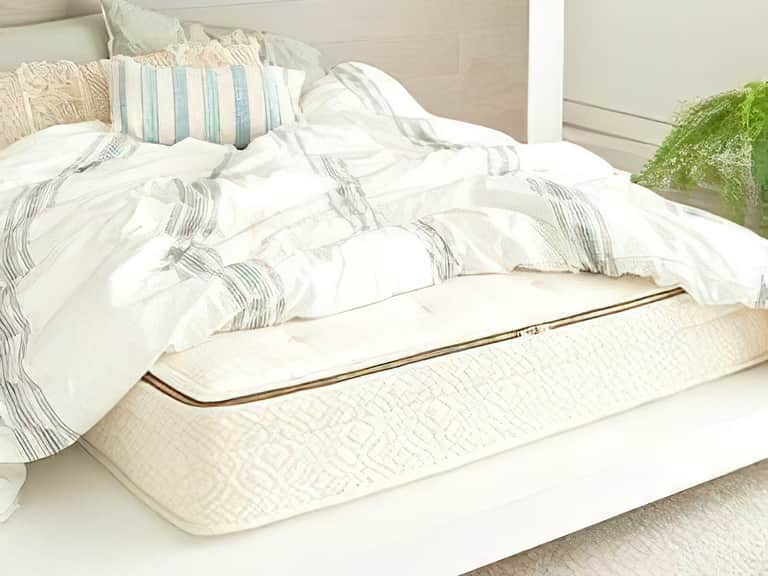
For a concrete example of how a specification can be read, the Naturepedic Azure Hybrid Organic Mattress is described as a 10-inch hybrid with a zippered organic cotton cover, six inches of wrapped coils, three inches of organic Dunlop latex, and a wool blend that includes organic wool, alpaca, and cashmere. Those details give a prospective buyer more to assess than the word “organic” alone: layer type, material mix, construction, and stated certification claims all become visible questions.
Look for descriptions that distinguish natural, organic, and synthetic components rather than blending them into one reassuring phrase. “Natural latex,” for example, is not the same claim as certified organic latex. A wool blend is not necessarily entirely wool, and a cotton cover may be organic cotton or conventional cotton. The distinctions matter because they describe different things.
Common materials and what they can mean for comfort
Organic cotton
Cotton commonly appears in mattress covers and sometimes in padding or batting. A cover is the fabric you meet first, though it is only one part of the sleep surface. Cotton’s feel depends on its weave, weight, quilting, and what lies beneath it. A cotton cover can feel smooth, substantial, or softly textured; its presence does not determine whether a mattress is firm or plush.
If a brand describes cotton as organic, check whether the claim identifies a recognized standard and whether it applies to the fabric, the finished textile, or another part of the product. It is also reasonable to ask whether the cover is removable, washable, or intended to be used with a mattress protector. Care guidance is practical information, not fine print to discover after an accident.
Natural and organic latex
Latex is used in mattress comfort layers and, in some designs, as a substantial part of the support system. It is often described as responsive or buoyant compared with materials that allow a slower, deeper sink. The precise feel depends on layer thickness, firmness, the rest of the construction, and the sleeper’s body and preferred position. “Latex” alone does not tell you whether a mattress will feel soft, firm, or suitable for you.
Terminology deserves attention. Natural latex refers to latex derived from rubber-tree sap, though the exact composition and processing can differ. A product might also use a blend that includes synthetic latex. Organic latex is a separate claim that should be tied to a relevant certification and clearly identified layer. If a specification says only “latex,” ask whether it is natural, blended, or synthetic, and what standard—if any—applies.
Manufacturing descriptions may distinguish between Dunlop and Talalay processes. These refer to different methods of producing latex foam and can be associated with different characteristics, but the labels do not replace a comfort assessment. A mattress built with Dunlop latex is not automatically right for every sleeper, nor does a process name establish organic status. Consider the actual firmness, layering, and documented certification.
Wool and wool blends
Wool may appear as a fill, a cushioning layer, or part of a barrier assembly. It can absorb moisture and influence how the surface manages warmth, but a shopper should resist turning these general properties into a promise of a particular night’s temperature. Sleep climate depends on more than one material: room temperature, bedding, mattress construction, and individual preference all play a part.
Ask whether wool is certified organic, conventionally sourced, or combined with other fibers. If the product description calls it a blend, look for the constituents and, where available, their proportions. Wool may also serve a specific construction function, so finding it in the materials list does not mean it makes up a large share of the mattress.
Coils, foam, and other components
Organic claims most often attract attention to fibers and latex, but hybrid mattresses also contain other materials. A coil core may provide a responsive support structure; foam can appear in comfort layers or transition zones; and adhesives, quilting threads, or fire barriers may be part of the assembly. These components do not all need to be organic for a mattress to contain organic materials. They should, however, be described as clearly as the headline materials.
Do not assume that a mattress with organic cotton and latex has no synthetic materials, or that a hybrid necessarily relies on one particular kind of foam. Ask for the full construction rather than inferring it from a short product name. Informed comparison depends on what is disclosed, not what a shopper hopes a label implies.
Certifications: what the label does—and does not—say
Third-party certifications can make material claims easier to evaluate, but certifications are not interchangeable. Each standard has its own scope, criteria, and verification process. One may focus on organic textile processing, another on latex, and another on chemical emissions or product safety. A logo is most useful when the seller explains what it certifies and which component carries the certification.
Two terms shoppers may encounter are GOTS and GOLS. The Global Organic Textile Standard (GOTS) concerns organic fibers and textile processing, with requirements across relevant stages of the textile supply chain. The Global Organic Latex Standard (GOLS) concerns organic latex products and their supply chain. The exact meaning of a claim still depends on the product, the certified entity, and the scope of the certificate. A brand’s use of a standard’s name should be accompanied by enough detail for the buyer to confirm what is covered.
Other labels may address particular health, emissions, or material criteria. For any certification, ask a few plain questions: Is it issued by an independent organization? Does it apply to a raw material, a component, a factory, or the finished mattress? Is the certificate current? Can the company identify the certificate holder or provide a way to verify the claim? These questions do not imply wrongdoing; they are simply how a broad label becomes a checkable statement.
It is especially important not to treat “certified,” “organic,” and “non-toxic” as synonyms. A certification may address a defined set of environmental or chemical requirements without making a universal claim about every possible exposure or health outcome. “Non-toxic mattress” is a phrase frequently used in marketing, but it is not a single, universal certification category. Look for the standard behind it and read what the standard actually tests or requires.
Similarly, the presence of one certification does not prove that every layer has the same status. A textile certificate may apply to the cover, while the support core and other materials are governed by separate specifications. The right question is not simply, “Is it certified?” but, “Which part is certified, to what standard, and how can I verify that?”
A practical method for comparing organic mattresses
When two mattresses use similar language, a short comparison routine can help bring the differences into focus. Save the product specifications rather than relying on a headline or a sales conversation that may omit details. Then compare the beds across these points:
- Materials by layer: Record the cover, comfort layers, support core, and fire barrier, including blends where disclosed.
- Certification scope: Note the name of each standard and the component or process it covers.
- Construction: Compare layer order, thickness, coil design if present, and whether the mattress has a removable cover.
- Comfort and support: Consider firmness, pressure relief, responsiveness, and how the mattress suits your sleeping position and body.
- Temperature and moisture: Read material claims cautiously and consider your room, sheets, blankets, and personal sleep preferences.
- Care and protection: Check cleaning instructions, whether a protector is recommended, and what happens if the mattress is stained.
- Trial, warranty, and return terms: Read the conditions, time limits, fees, and exclusions before making a purchase.
It helps to separate material priorities from comfort priorities. A shopper might care deeply about certified organic cotton but prefer a firmer surface; another may prioritize pressure relief and be flexible about the cover’s fiber. A useful buying decision respects both sets of concerns instead of allowing a certification label to stand in for a sleep test.
Firmness numbers and adjectives are not perfectly standardized across manufacturers. If possible, try a mattress using the retailer’s stated trial arrangements, and pay attention to how it feels after more than a few minutes. If trying it in person is not practical, investigate the return policy and note any conditions that could affect whether a trial is genuinely useful.
Organic materials and sleep experience are related, but not identical
Material origins can matter for environmental, ethical, or personal reasons. They do not determine comfort on their own. Two mattresses made with organic materials may feel quite different because of layer thickness, density, quilting, coil configuration, or the way the components work together. Conversely, a mattress that feels comfortable to one person may not suit another, regardless of how its materials are certified.
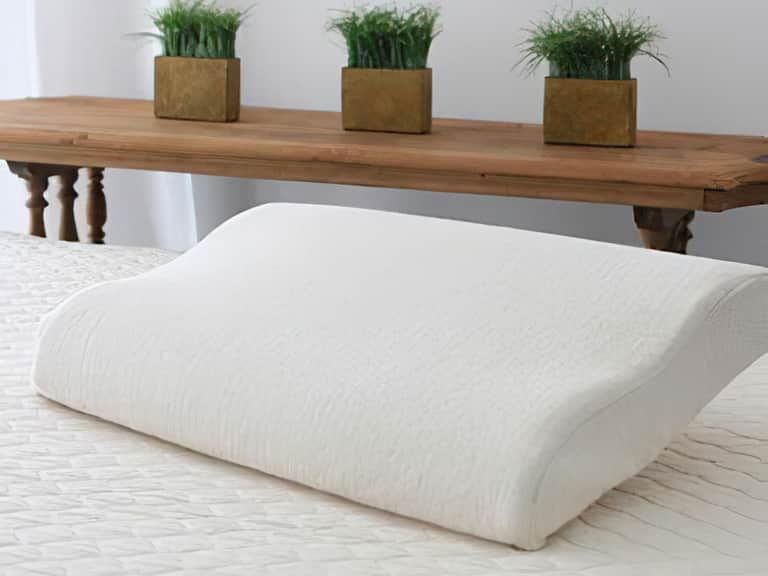
Think about the complete sleep setup. A mattress works alongside a pillow, sheets, duvet, and the room’s temperature and humidity. A thick topper can change how the mattress feels; a pillow with excessive or insufficient loft can affect neck comfort; heavier bedding can alter warmth. When assessing a mattress, consider whether the sensation you are trying to correct comes from the mattress itself or from one of its surroundings.
For example, if an existing bed feels too firm, a topper may change the surface feel, but it does not alter the support structure beneath it. The same principle applies to mattress pads, which are generally designed to add a layer of protection or modest cushioning rather than replace a mattress’s core construction. Understand the role of each accessory before expecting it to solve a structural or comfort mismatch.
People with persistent pain, numbness, or sleep difficulties should not treat a mattress label as medical guidance. A bed can influence comfort and posture, but it cannot diagnose or treat an underlying condition. If symptoms persist, a qualified health professional can help assess them in context.
Questions worth asking before you buy
A good retailer should be able to answer specific questions without turning every response into a claim of superiority. If details are missing, ask for them in writing. Useful questions include:
- What materials are used in each layer, including blends and the fire barrier?
- Is the latex natural, blended, or synthetic, and what certification applies to it?
- Which parts of the mattress are certified organic, and which standard verifies that claim?
- Can I review the certificate or verify its current status through the certifying organization?
- Are adhesives or other binding materials used, and how are they described?
- What are the care instructions, and is a mattress protector recommended?
- What do the trial period, return policy, warranty, and delivery terms require?
The answers should be precise enough to distinguish an organic cover from an organic latex layer, or a tested component from a fully certified finished product. If the seller cannot clarify a claim, that uncertainty is useful information in itself. You can decide whether it is acceptable, seek further documentation, or compare another mattress with more transparent specifications.
Common misunderstandings about organic mattress claims
“Organic” means every component is organic
Not necessarily. A mattress may combine certified organic materials with conventional fibers, foam, metal, or other components. Read the list and certification scope rather than assuming that a product-level description covers every layer.
“Natural” and “organic” mean the same thing
They do not. “Natural” is a broad descriptor and may not identify a specific standard or production method. “Organic” should be supported by a relevant certification when the claim is presented as such. Ask for the exact material and standard.
A certification guarantees a particular feel
Certifications address defined production or material criteria, not whether a mattress will feel comfortable to you. Comfort depends on construction, body shape, sleeping position, and preference. A certified material is not a substitute for assessing firmness and support.
“Non-toxic” is a complete explanation
It is not. The phrase does not identify a single universal test or certification. Ask which specific standard or assessment supports the claim and what it covers. Prefer concrete, verifiable information over an unqualified promise.
The useful habit: read claims in context
Choosing an organic mattress need not involve deciphering every technical detail of textile production or foam chemistry. It does require a habit of asking what a statement refers to. Identify the material. Locate it in the mattress. Find out whether it is certified and by whom. Then consider how the whole construction may feel and whether the care, trial, and return terms suit your circumstances.
That approach also leaves room for reasonable differences in priorities. Some buyers are chiefly concerned with organic fiber sourcing; others are focused on avoiding particular materials, reducing heat buildup, or finding a specific kind of support. A clear specification makes those priorities easier to compare, even when no single mattress checks every box.
In the end, a label is not the mattress. It is one piece of evidence about how the mattress was made or what it contains. The best choice is the one whose materials and claims you can understand, whose comfort suits your needs, and whose documentation is clear enough to let you make the decision with your eyes open.
Quick checklist
- Read the complete layer-by-layer materials list.
- Separate “natural,” “organic,” and “non-toxic” claims.
- Check which components a certification actually covers.
- Verify the named standard and certificate details where possible.
- Compare construction and comfort independently of certification.
- Review care instructions, trial conditions, return terms, and warranty.